
Dean of the Faculty of Science at the University of Kurdistan States:
Kurdistan’s Scientific, Technological, and Economic Capacities Have Remained Overlooked
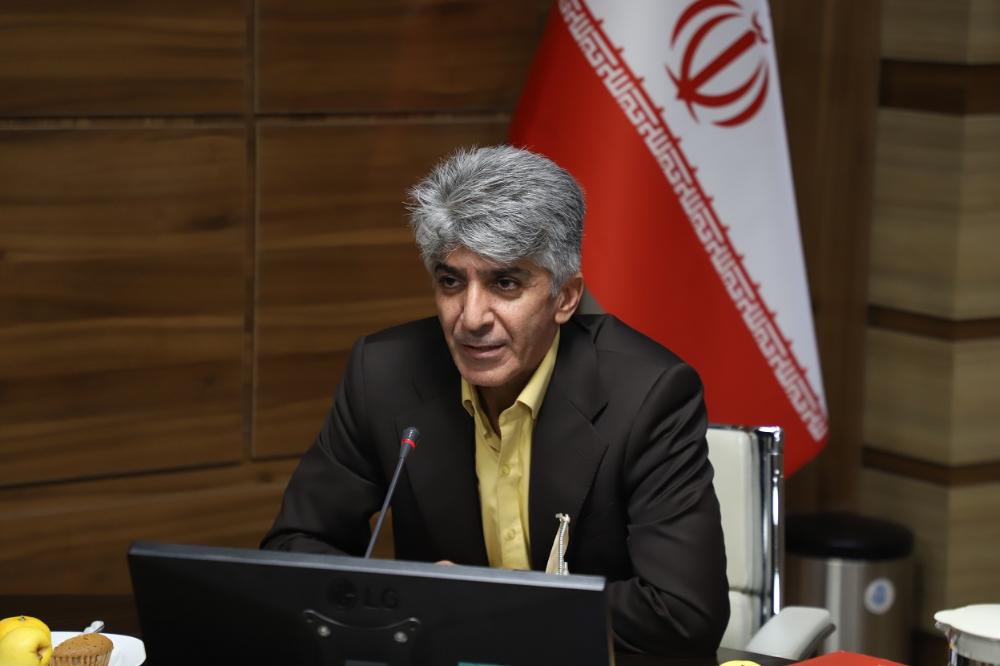



Pointing to the province's capacities in the fields of agriculture, mining, and human resources, the Dean of the Faculty of Science at the University of Kurdistan stated that despite Kurdistan's numerous capabilities, a portion of these capacities has not been properly utilized.
According to the Public Relations of the University of Kurdistan, Dr. Kayoomars Karami stated on Wednesday, October 28, 2026 (Aban 6, 1405), during a meeting of the University’s Science and Technology Taskforce—held with the participation of representatives from knowledge-based companies and faculty members of the University of Kurdistan—that one of the province's vital capacities is its capable human capital, which, unfortunately, has been deprived of a portion of scientific facilities and opportunities due to its distance from the center.
Noting that the University of Kurdistan possesses 10 innovation centers, he added that one of the primary policies of the university is to establish an innovation center alongside each faculty.
Karami continued that these centers are currently active, and the University of Kurdistan is striving to play a constructive role in the sphere of technology and innovation by utilizing its internal facilities and capabilities.
Referring to the potential of the province's border regions, the Dean of the Faculty of Science at the University of Kurdistan remarked that residing in border areas is one of the significant capacities of border provinces—a capacity which, in his view, has not received sufficient attention in provinces such as Kurdistan, Kermanshah, Ilam, and West Azerbaijan.
Highlighting the participation of the University of Kurdistan in the projects of the Barakat Foundation and the Alavi Foundation in previous years, Karami added that despite resource constraints, this university has consistently endeavored to take steps toward the development of the province and the resolution of its economic and social issues.
He further pointed to the capacities within the field of information technology, stating that there are companies operating in Kurdistan Province that have succeeded in offering their products and services in international markets and achieving successes across various specialized domains.
Also referring to the activities of companies in the sector of computer and online games, Karami stated that some of these companies generate foreign currency revenue and have created a suitable capacity for the development of technological businesses in the province; nevertheless, the support extended to these entities has been limited, and greater support could assist in expanding their activities.
University-Industry Collaboration Remains Highly Limited
Later in the meeting, the Director of Research Affairs at the University of Kurdistan referred to the university's scientific and research capacities, stating that despite the availability of research infrastructure, the university's connection with industry remains limited; therefore, greater efforts must be made to strengthen this collaboration and utilize the capabilities of faculty members in resolving the province's issues.
Dr. Ghader Mirzaghaderi announced the submission of more than 100 research proposals by the university's faculty members and stated that despite forwarding these proposals through the Ministry of Science, no specific feedback regarding their review and support has been received thus far.
Pointing to the existing capacities in the fields of natural resources and agriculture, he added that there is a gap between the existing potentials in the province and their conversion into industrial products, technology, and innovation, which must be resolved through the cooperation of officials and relevant entities.
Mirzaghaderi further referred to the systems for issuing research calls and the method of allocating quotas to universities, stating that if research topics are made available to researchers nationwide through calls for proposals, it is expected that a share be considered for the University of Kurdistan and its faculty members.
In conclusion, pointing to the existing limitations in securing tax credits for research activities and industry collaboration, the Director of Research Affairs at the University of Kurdistan called for greater attention to this matter.

Faculty Systems

Student Systems

Staff Systems

Virtual Tour

Telephone Directory

Privacy Policy Statement
Quick Links
Electronic Services
Useful Links


University of Kurdistan, Pasdaran Boulevard, Sanandaj, Iran

Postal Code: 6617715175

Phone: +988733664600-8

Email: info@uok.ac.ir


site visit
- today:
- yesterday:
- all:
Last Update
25 Nov 2026 - 07:05:34