
Presentation of Research Imperatives and Challenges of the University of Kurdistan in a Session with the Deputy Minister of Science
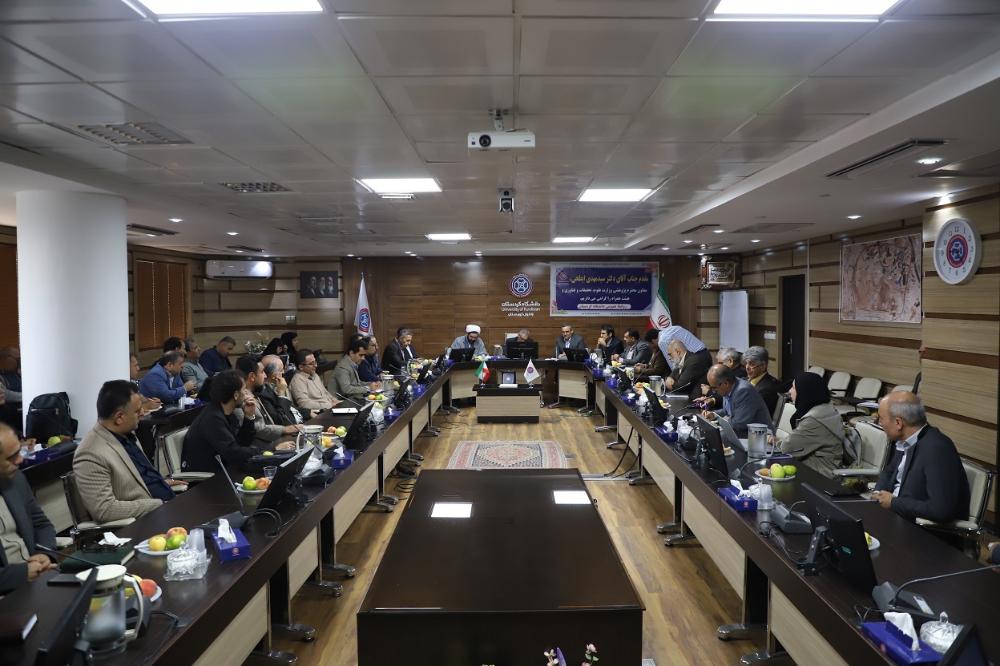



During a meeting of the University of Kurdistan Council convened with the Deputy Minister for Research at the Ministry of Science, Research, and Technology, the fundamental challenges and requirements of the university's research sector were articulated, encompassing the instability of research funding, constraints on international academic partnerships, impediments to the expansion of industry-sponsored research contracts, and the obsolescence of laboratory infrastructure and equipment.
According to the Public Relations Office of the University of Kurdistan, the University Council convened on Sunday, October 11, 2026 (19 Mehr 1405), in the presence of Dr. Seyed Mehdi Abtahi, Deputy Minister for Research at the Ministry of Science, Research, and Technology; Dr. Adel Siosemardeh, Chancellor of the University of Kurdistan; esteemed faculty members; and research vice-deans.
Highlighting the academic stature of the university, Dr. Adel Siosemardeh stated: "With an enrollment exceeding 10,000 students, 447 faculty members, approximately 504 international students, and 254 distinct academic degree programs and concentrations, the University of Kurdistan stands as the sole comprehensive university in the province, serving a pivotal role in the scientific advancement of western Iran."
Announcing the addition of 30 new academic programs in the current year, he added: "Among these, 10 doctoral programs and two undergraduate programs have been incorporated into the educational offerings of the university."
The Chancellor also highlighted the development of a university faculty in the city of Saqqez, stating: "Every effort is being made to inaugurate student admissions at this faculty starting in October 2027 (Mehr 1406)."
Reflecting on the university's research distinctions, Siosemardeh remarked: "Nine faculty members of the University of Kurdistan are recognized among the world's top one percent of most-cited researchers, and 23 scholars are ranked among the top two percent of scientists globally. Furthermore, two professors from this university have been honored with the prestigious Allameh Award among only 20 recipients nationwide."
While evaluating the university's standing among national higher education institutions as commendable, he identified the deficit of residential and dormitory facilities relative to the student population as a notable administrative challenge.
Subsequently, Dr. Bahramnejad, Vice-Chancellor for Research at the University of Kurdistan, delineated the prominent challenges within the research domain, referencing the operations of the Kurdistan Studies Research Institute, the Entrepreneurship and Technology Incubator Center, the Information Technology Center, and nine specialized university research centers.
He identified the volatility of research financing, constraints on dedicated internal revenues, procedural obstacles to advancing research contracts with industries and executive bodies, limitations in international scientific collaboration and foreign grant procurement, and the deficit and depreciation of laboratory instrumentation as principal concerns.
The Vice-Chancellor for Research further pointed to underdeveloped digital infrastructures and smart management platforms, as well as constrained budgets for funding sabbatical leaves and supporting faculty participation in international conferences, as further ongoing research challenges.
Dr. Masoud Ebrahimi, Director of Industrial and Social Relations at the University of Kurdistan, addressed the university's financial constraints, stating: "Owing to regional disparities and geographic distance from the capital, the University of Kurdistan has been precluded from numerous developmental and educational funding streams."
Emphasizing the vital importance of prioritizing the university's institutional capabilities, he added: "Despite infrastructural constraints, the university demonstrates commendable performance relative to the allocations received, thereby justifying increased state patronage and investment."
Ebrahimi also addressed the status of educational and laboratory infrastructure across the province, calling for focused efforts to develop these facilities and asserting that the current infrastructure fails to meet the operational demands of the University of Kurdistan.
At the conclusion of the session, attending faculty members voiced their assessments, insights, and structural concerns across the pedagogical and research spheres of the University of Kurdistan, underscoring the urgent necessity of resolving these systemic challenges.

Faculty Systems

Student Systems

Staff Systems

Virtual Tour

Telephone Directory

Privacy Policy Statement
Quick Links
Electronic Services
Useful Links


University of Kurdistan, Pasdaran Boulevard, Sanandaj, Iran

Postal Code: 6617715175

Phone: +988733664600-8

Email: info@uok.ac.ir


site visit
- today:
- yesterday:
- all:
Last Update
25 Nov 2026 - 07:05:34