
Vice-Chancellor for Cultural, Social, and Student Affairs of the University of Kurdistan:
The "Rooyesh" National Festival Is a Platform for the Flourishing of Student Talents / Over 9,000 Works Submitted to the Festival Secretariat
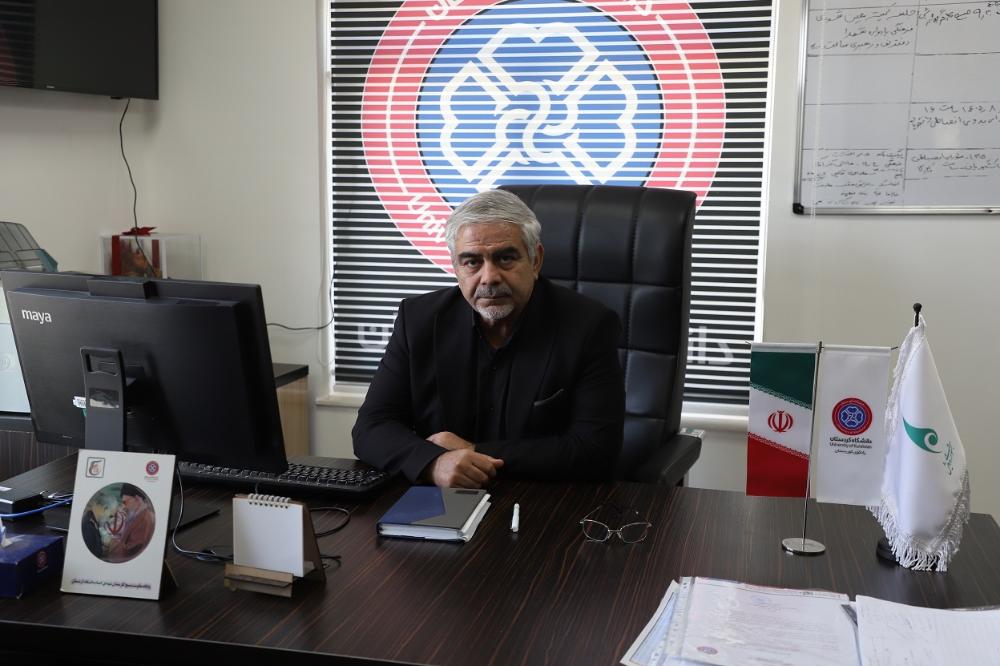



The Vice-Chancellor for Cultural, Social, and Student Affairs of the University of Kurdistan announced the holding of the "Rooyesh" National Festival hosted by the University of Kurdistan, stating: "The 'Rooyesh' Festival is an opportunity to identify and nurture student talents and to showcase their cultural, artistic, and literary capabilities."
According to the Public Relations of the University of Kurdistan, Mehdi Salehi, pointing out that the 13th and 14th editions of the "Rooyesh" National Festival will be hosted by the University of Kurdistan in the month of Aban this year, stated: "In total, 9,800 works have been submitted to the secretariat of these two editions of the festival. The submitted works will be evaluated and selected after undergoing the judging stages, and the selected works will advance to the festival."
Stating that the "Rooyesh" National Festival is one of the primary events of the Ministry of Science, Research, and Technology in the cultural sphere of universities, he added: "This festival is held with the aim of identifying and introducing the capabilities and achievements of cultural, artistic, religious, and social associations across the country's universities."
Salehi enumerated fostering creativity and the flourishing of student talents among the important objectives of this event and said: "Creating a platform for interaction, synergy, and the exchange of experiences among the cultural associations of the nation's universities is another objective of holding the 'Rooyesh' National Festival."
Referring to the target audience of this festival, the Vice-Chancellor for Cultural, Social, and Student Affairs of the University of Kurdistan stated: "Members of the general assembly of cultural associations, members of the central council of associations, association secretaries, secretaries of the coordination council of associations, and experts of cultural, artistic, social, and religious associations are the main audiences of this event."
Salehi further pointed to the holding of the festival in two competitive sections—Associations and Students—and stated: "The competitive section for associations is held in 6 categories, and the competitive section for students is held in 7 categories and 20 cultural and artistic fields."
Referring to the competitive section for associations, he stated: "In the associations section, the activities and achievements of university cultural associations are evaluated across themes including Best Association, Cultural and Social Innovation, Cyberspace and Digital Activities, Social Responsibility, Association Publications, Student Dialogue and Free-Thinking Forums, Iranian and Islamic Identity, and Best University."
Salehi added: "The student competitive section is also held in seven categories—literary, voice acting and hosting, handicrafts, filmmaking, music, visual arts, and performing arts—and students' works are evaluated across diverse cultural and artistic fields."
Elaborating on the details of the student section categories, he said: "In the literary category, poetry, lyrics, short stories, screenplays, plays, and podcast proposals; in the voice acting and hosting category, works related to dubbing, narration, and hosting; and in the handicrafts category, Rooyesh handcrafts, Rooyesh patterned weaves, and sewing and apparel design are reviewed."
The Vice-Chancellor for Cultural, Social, and Student Affairs of the University of Kurdistan continued: "Short films, documentary films, and music videos or clips are the themes of the filmmaking category. In the music category, traditional and regional music, solo and group performances of traditional music, and solo and group vocals are evaluated."
Regarding the other categories of the student section, Salehi stated: "Visual arts include calligraphy, graphics, painting and drawing, sculpture and volume, camera photography, and mobile phone photography. Additionally, students' works and performances in the fields of stage, street, puppet, ritual, and traditional theater will be reviewed in the performing arts section."

Faculty Systems

Student Systems

Staff Systems

Virtual Tour

Telephone Directory

Privacy Policy Statement
Quick Links
Electronic Services
Useful Links


University of Kurdistan, Pasdaran Boulevard, Sanandaj, Iran

Postal Code: 6617715175

Phone: +988733664600-8

Email: info@uok.ac.ir


site visit
- today:
- yesterday:
- all:
Last Update
25 Nov 2026 - 07:05:34