
The University of Kurdistan Council Convenes with the Attendance of the Provincial Governor
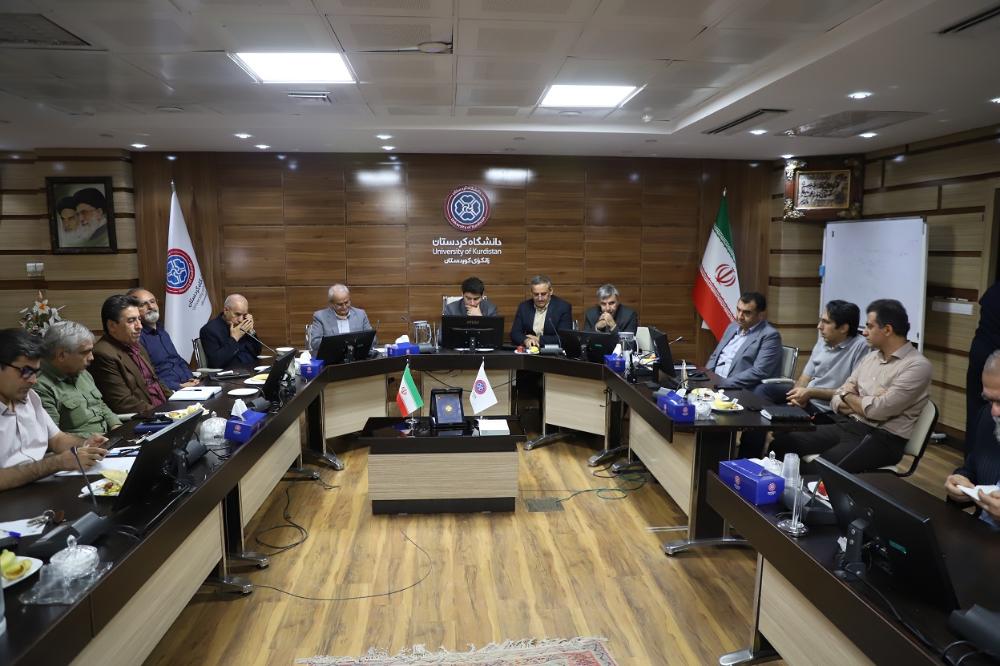



On Saturday, August 1, 2026, the University of Kurdistan Council held a formal session at the university’s assembly hall. The meeting was attended by the Governor of Kurdistan, the President of the University, the Head of the Provincial Management and Planning Organization, university vice-presidents, deans of faculties, and a group of distinguished faculty members.
According to the University of Kurdistan Public Relations Office, Dr. Adel Sio-Se-Marda, President of the University of Kurdistan, detailed the institution’s latest achievements and strategic roadmaps during the session. He announced a significant expansion in educational, research, and international activities, stating: "With a student body exceeding 10,000, 447 faculty members, approximately 504 international students, and 254 academic programs, the University of Kurdistan—as the province's sole comprehensive university—plays a pivotal role in the scientific development of western Iran."
Highlighting the university's academic successes, Dr. Sio-Se-Marda noted that the university recently secured licenses to launch 18 new Master’s degree programs and several Doctoral programs, a scale of expansion that is largely unprecedented. Regarding the establishment of the Saqqez Faculty, he remarked: "Saqqez was among the few highly populated cities in the country lacking a university presence. Through concerted efforts, the Saqqez Faculty has been established, and student admissions are scheduled to commence in October 2027."
He further emphasized that the University of Kurdistan has demonstrated remarkable growth in research indices in recent years, adding: "Currently, nine members of our faculty are ranked among the top 1% of the world's most-cited researchers, while 23 faculty members are positioned within the top 2% globally."
The President also pointed to the enhancement of industrial collaborations, the increase in research funding acquisition, the expansion of international partnerships, the implementation of smart classrooms, and the execution of innovative projects in education and technology. He concluded by stating that the university remains committed to pursuing its development plans through the expertise of its faculty and continued institutional support.
The session concluded with faculty members outlining key initiatives, challenges, and the university's recent milestones.

Faculty Systems

Student Systems

Staff Systems

Virtual Tour

Telephone Directory

Privacy Policy Statement
Quick Links
Electronic Services
Useful Links

University of Kurdistan, Pasdaran Boulevard, Sanandaj, Iran

Postal Code: 6617715175

Phone: +988733664600-8

Email: info@uok.ac.ir


site visit
- today:
- yesterday:
- all:
Last Update
26 Aug 2026 - 21:40:18