
Aiming to Strengthen the Link Between Academic Education and the Job Market;
Executive Guidelines for the "CO-OP" Skill-Training Program Reviewed at the University of Kurdistan
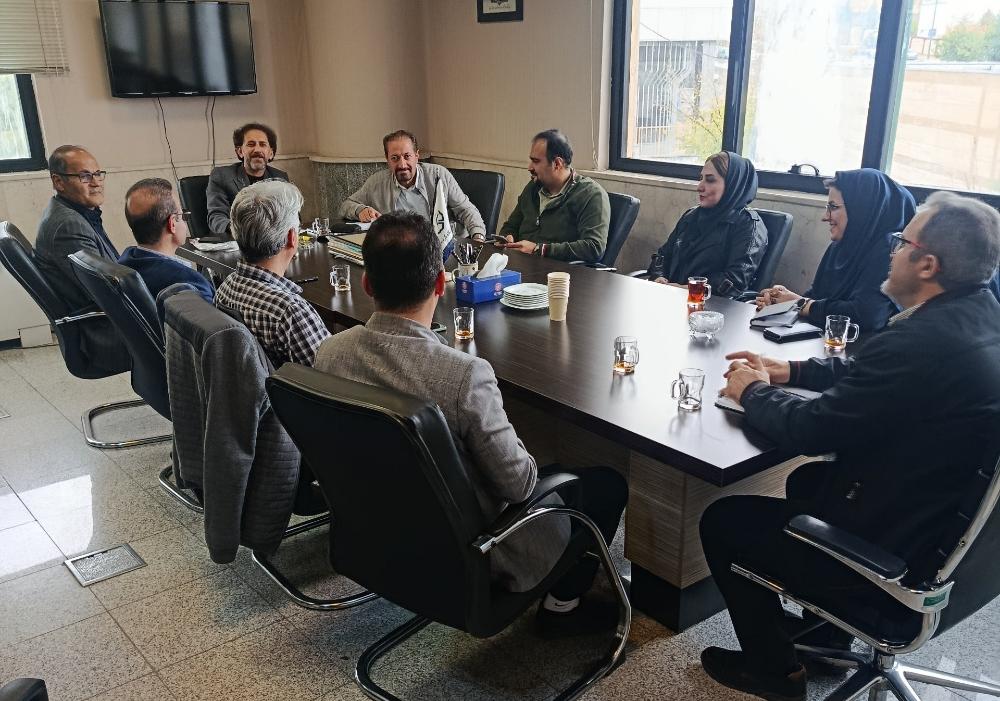



A meeting to review the executive guidelines and instructions for the "CO-OP" program, aimed at strengthening the link between academic education and the workplace, was held at the University of Kurdistan with the attendance of educational and industry-relation directors.
According to the Public Relations of the University of Kurdistan, during this meeting—held at the Office of the Vice-Chancellor for Academic Affairs and attended by members of the CO-OP Council, comprising the directors of the Center for Industry and Society Relations, Academic Affairs, Postgraduate Studies, the School of Employment, and faculty representatives—various executive and educational dimensions of the program were discussed and reviewed.
In this session, it was decided that the proposed text of the executive guidelines and instructions for the CO-OP program would be presented by the faculty representatives to their respective educational councils and made available to academic departments for review and feedback.
The CO-OP program (Cooperative Education Program) is designed specifically for undergraduate students and comprises a combination of full-time study periods at the university and full-time work periods in industry. Based on this plan, after completing their fifth semester and up until the end of their ninth academic semester, students can work in approved companies during two seven-month periods (with an interval of at least one academic semester between the two periods).
The implementation of this program at the University of Kurdistan is pursued in line with transforming academic teaching methods, promoting skill-based learning, and enhancing the employability of graduates. By providing the opportunity to gain professional experience alongside theoretical education, this approach strengthens mutual interaction between the university and the production, technology, service, and industrial sectors, paving the way for training graduates suited to the needs of the job market.

Faculty Systems

Student Systems

Staff Systems

Virtual Tour

Telephone Directory

Privacy Policy Statement
Quick Links
Electronic Services
Useful Links


University of Kurdistan, Pasdaran Boulevard, Sanandaj, Iran

Postal Code: 6617715175

Phone: +988733664600-8

Email: info@uok.ac.ir


site visit
- today:
- yesterday:
- all:
Last Update
25 Nov 2026 - 07:05:34