
In a seminar titled "Jihad of Clarification," the Representative of the Supreme Leader at the University of Kurdistan addressed the University’s Staff Basij, highlighting the various dimensions of soft war. He emphasized the necessity of clarification, addressed economic challenges, underscored the achievements of the Islamic Revolution, and distinguished between legitimate protest and riotous unrest, while stressing the role of public awareness and vigilance in maintaining national security and progress.
Jihad of Clarification: The Paramount Contemporary Duty in Countering Soft War
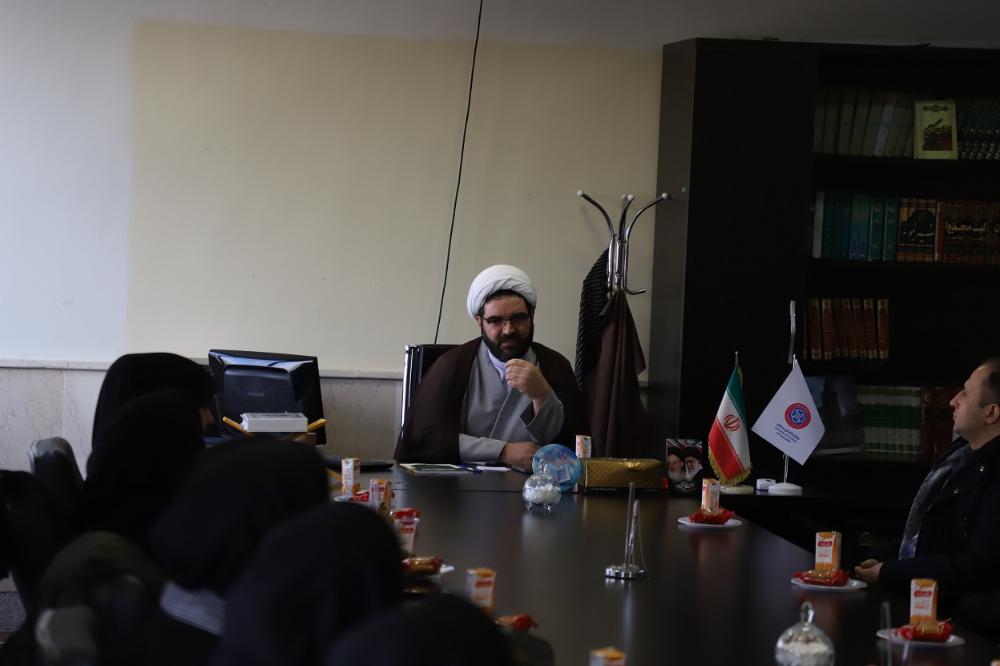



According to a report by the University of Kurdistan Public Relations, Hojjatoleslam Abedin Rostami, speaking at the seminar held in the Office of the Representative of the Supreme Leader, extended his congratulations on the anniversary of the Islamic Revolution’s victory. He stated: "Under current circumstances, Jihad is not limited to the military battlefield; rather, Jihad through language and discourse remains a constant necessity and stands as one of the most critical duties for Muslims and believers."
Highlighting the extensive scope of the soft war directed against the country, Hojjatoleslam Rostami noted: "Based on the latest statistics, individuals in Iran are exposed to soft war tactics approximately 189 times more than the global average." He explained that soft war operates by distorting realities, adding: "While the enemy engages with lives and property in a 'hard war,' one must enter the field with language and the pen in a 'soft war.' A proper understanding and clarification of soft war are essential for public awareness and social fortitude, as many remain unaware of its true dimensions."
Addressing the nation's economic difficulties, Hojjatoleslam Rostami remarked: "The existence of economic problems, sanctions, and instances of mismanagement is undeniable. Much of the observed rent-seeking and corruption stems from administrative shortcomings, indicating that the people’s livelihood is not at an optimal level. The economy has become a point of vulnerability, and any development directly impacts the lives and sustenance of the people." He further stressed the necessity of employing appropriate methods and models in clarifying these issues, stating: "We have a duty to provide a correct clarification of events and must fulfill this responsibility through precise and fair methods."
Regarding the origins of the Islamic Revolution, he noted: "The Islamic Revolution raises numerous questions, such as why it occurred and whether it benefited the people. Therefore, a pathology of the Revolution requires statistics, data, and impartiality, ensuring that both strengths and weaknesses are accurately identified." He continued: "The Iranian people are rational and calculating; they can discern who acts against them and who stands with them, and who seeks destruction versus who seeks to build. Consequently, despite all challenges, security remains the paramount issue for the people, and they prioritize national security over their economic hardships."
Warning of external threats, Hojjatoleslam Rostami pointed out: "The enemy has established numerous bases around the country. Should they gain entry, they will not discriminate between individuals, as evidenced by events in other nations." He further noted: "The people are always the primary and most powerful pillar of any revolution. During the Pahlavi era, it was the people who toppled the despotic regime despite its international support. Their continued support for the Islamic Revolution today stems from their ability to distinguish right from wrong."
Reflecting on the history of national resistance, he stated: "We endured eight years of an imposed war and years of bombardment; yet, despite all pressures, the Iranian nation never capitulated and has always stood firm." He added: "Over the past 47 years, the Islamic Republic of Iran has achieved significant milestones in science, medicine, economy, and development. While the country faces numerous challenges today, the scientific and technological advancements compared to the Pahlavi era are significant and undeniable." In conclusion, Hojjatoleslam Rostami emphasized the necessity of conceptual clarity, stating: "Protest is distinct from rioting, and these two concepts must not be conflated."


Quick Links
Electronic Services
Useful Links


University of Kurdistan, Pasdaran Boulevard, Sanandaj, Iran

Postal Code: 6617715175

Phone: +988733664600-8

Email: info@uok.ac.ir


site visit
- today:
- yesterday:
- all:
Last Update
17 Feb 2026 - 10:53:31